Black-footed ferret recovery: Guide to survival
"The ferret was reintroduced by the USFWS, which according to the tribe promised to pay more than $1 million a year through 2010."
The black-footed ferret recovery efforts demonstrate how collaborative captive-breeding and reintroduction programs can work to save a species. Success relies on managing habitat, maintaining prey bases, and coordinating between government agencies, tribal groups, and private landowners.
This guide examines the logistics of such a wildlife restoration project, identifies the biological requirements for survival, and highlights the limitations of managing small carnivores in vast landscapes.

Key takeaways: * Collaborative efforts involve the USFWS, tribal agencies, and private landowners. * Successful reintroduction requires a robust prey base, primarily prairie dogs. * Captive-breeding programs provide the necessary population to seed wild habitats.
How does a wildlife restoration project begin?
A researcher watches a small, dark-furred animal vanish into a burrow during a sunset inspection. The process of a wildlife restoration project typically begins with a dedicated captive-breeding program designed to bolster dwindling numbers.
According to the United States Fish and Wildlife Service, a captive-breeding program resulted in the reintroduction of ferrets into eight western US states, Canada, and Mexico from 1991 to 2009.
This period of active reintroduction established a foundation for survival across diverse territories. Since 1991, the Fish and Wildlife Service, state and tribal agencies, private landowners, conservation groups, and North American zoos have actively reintroduced ferrets back into the wild.
These diverse groups work together to ensure the animals can adapt to various environments.
The expansion of the population requires constant management of breeding lineages. In 2025, additional litters were produced by Antonia, Sibert, and Red Cloud at the Smithsonian Conservation Biology Institute, with a fourth by Noreen at the National Black-footed Ferret Conservation Center.
These controlled environments allow for the careful monitoring of genetic health.
- Identify suitable habitat patches.
- Assess the local ecosystem's carrying capacity.
- Secure necessary legal permits.
What are the essential requirements for a successful ferret reintroduction success?
A biologist examines a sprawling prairie, noting the endless holes left by colonial rodents. Achieving ferret reintroduction success depends heavily on the availability of specific prey and suitable shelter. Up to 90% of the diet of these animals is composed of prairie dogs.
The relationship between the predator and the prey is the cornerstone of habitat management.
Anecdotal observations and 42% of examined fossil records indicated that any substantial colony of medium- to large-sized colonial ground squirrels, such as Richardson's ground squirrels, may provide a sufficient prey base and a source of burrows for black-footed ferrets.
Without these colonies, the ferrets would lack both food and the protection of underground tunnels. The stability of the prairie dog population directly dictates the viability of the ferret presence in a given area.
In this sequence, the second step is the most extensive.
According to Forest Service, the 2010 record includes 1 million.
How is the usfsa ferret program managed through breeding?
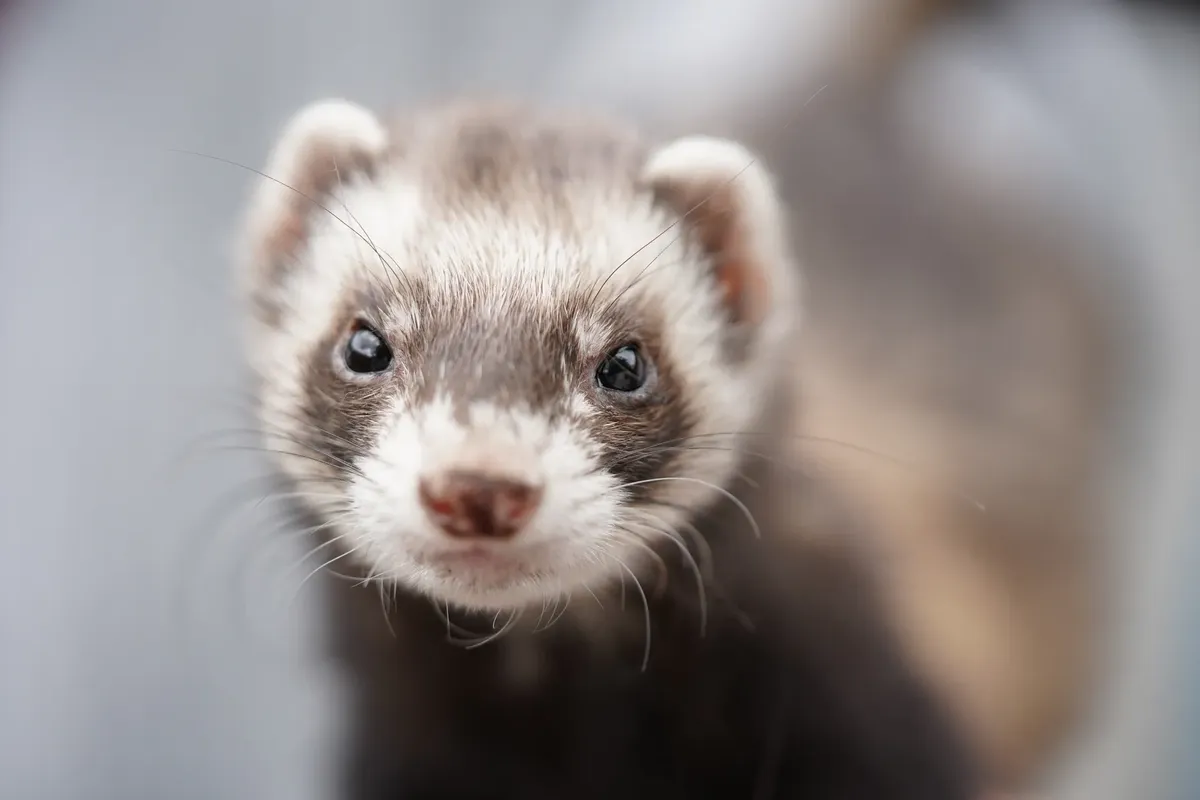
A keeper carefully inspects a nursery enclosure where new kits are being monitored. Effective management of a species recovery effort involves rigorous breeding protocols to ensure genetic diversity.
The work involves specialized facilities that mimic natural conditions while providing veterinary oversight.
One way to manage growth is through the structured production of new generations in specialized centers.
In 2{0}25, additional litters were produced by Antonia, Sibert, and Red Cloud at the Smithsonian Conservation Biology Institute, with a fourth by Noreen at the National Black-footed Ferret Conservation Center.
I once watched a technician prepare a specialized diet for a recovering kit, noting how much precision goes into these programs. Successful programs must balance the numbers of individuals with the carrying capacity of the wild habitat.
| Breeding Facility | Notable Individuals |
|---|---|
| Smithsonian Conservation Biology Institute | Antonia, Sibert, and Red Cloud |
What are the movement patterns of reintroduced ferrets?
A tracker follows a trail of disturbed earth through a dusty field. Understanding how animals move is vital for understanding how they interact with the landscape. Movement patterns help biologists determine how much territory is needed to support a single animal.
One study showed that from December to March over a 4-year study period, black-footed ferrets investigated 68 white-tailed prairie dog holes per 1 mile (1.6 km) of travel/night. This high level of activity shows how much energy is spent searching for food and shelter.
Additionally, ferrets may travel up to 11 miles (18 km) to seek prey, suggesting that they will interchange freely among white-tailed prairie dog colonies that are less than 11 miles (18 km) apart. These wide-ranging movements require large, connected habitats to be successful.
How do we manage the biological needs of the species?
A veterinarian checks the weight of a ferret during a routine health assessment. Managing the biological needs of the species requires understanding their reproductive and developmental cycles. Scientists must time releases and monitoring efforts to match natural life stages.
In captivity, gestation of black-footed ferrets lasts 42–45 days. Following this period, the development of the offspring follows a predictable timeline: 1. The kits are born after the gestation period. 2. Kits first emerge above ground in July, at 6 weeks old. 3.
Juvenile males and females disperse following litter breakup.
For example, near Meeteetse, Wyoming, 9 juvenile males and three juvenile females dispersed 1 to 4 mi (1.6 to 6.4 km) following litter breakup. This dispersal is a natural part of the life cycle that must be accounted for in habitat planning.
What are the limitations of these conservation efforts?
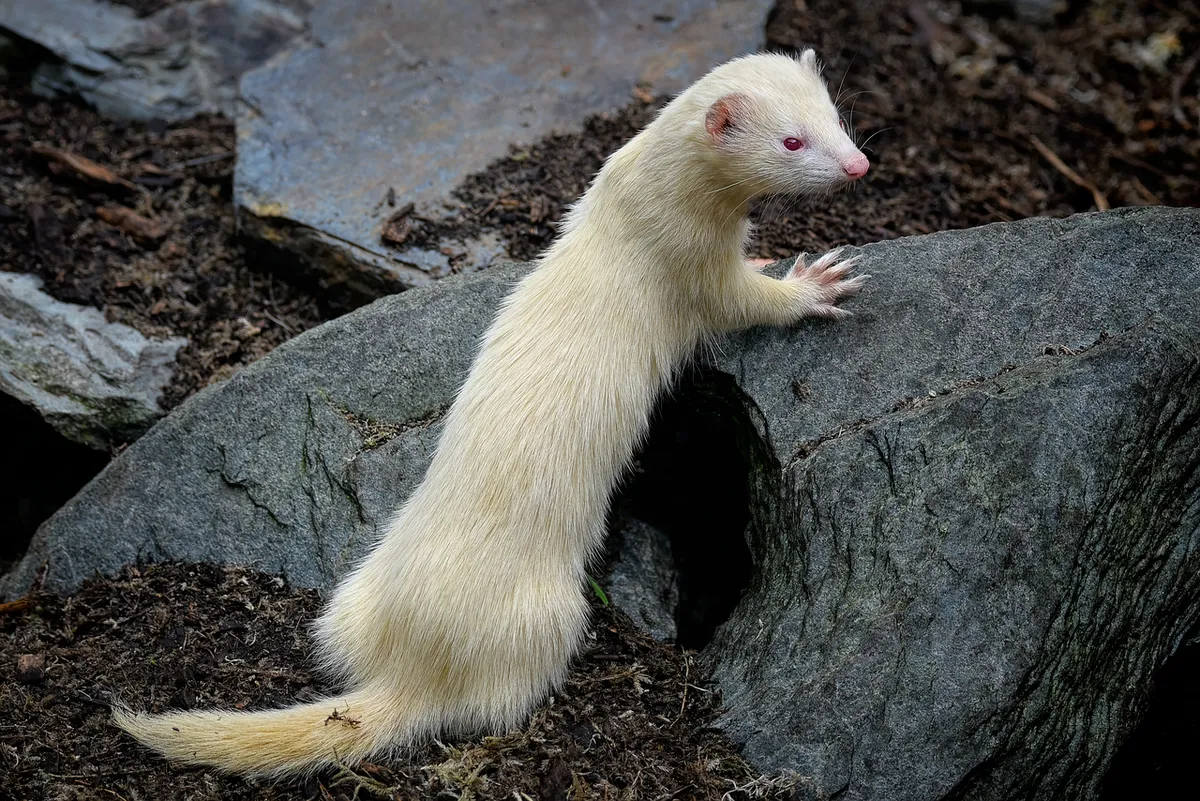
A field worker looks out over a landscape where the prairie dog colonies are thinning. While reintroduction is successful in some areas, certain environmental factors can limit the progress of endangered species revival.
According to the Forest Service, the ferret was reintroduced by the USFWS, which according to the tribe promised to pay more than $1 million a year through 2010.
One limitation is the reliance on specific prey availability. If the prairie dog colonies decline, the ferret population cannot be sustained.
Furthermore, while climate generally does not limit black-footed ferret activity, it may remain inactive inside burrows for up to 6 days at a time during winter.
Black-footed ferret recovery
The subject here is Black-footed ferret recovery.
The same subject is also called mustelid conservation success.
This part also covers wildlife management detail.
Related
- Animal-Directed Funding Boosts Canine Health Outcomes
- Pet Welfare: How 77% Public Support Changed Animal Laws
Disclaimer: This article is general information, not medical advice. Consult a qualified healthcare professional before taking any supplement or medication.






Comments 0