Rabbit Sounds: 5 Signs of Pain or Stress in Your Pet
"Understanding the diverse sounds rabbits make can help caretakers better interpret their behavior and health."
Key Takeaways * Rabbits communicate through a mix of vocalizations, body language, and environmental responses. * Common sounds like purring, grunting, and hissing signal specific emotions ranging from joy to aggression.
* High-pitched squeaks are often red flags for extreme pain, fear, or acute distress. * Monitoring changes in your rabbit's "voice" is a vital, non-invasive way to track their long-term well-being.

What are my rabbit's sounds actually telling me? You are sitting on the living room rug at 3:00 PM, watching your rabbit nibble on a piece of Timothy hay, when you hear a soft, rhythmic vibration. It isn't a cat's purr, but a gentle tooth clicking that signals your bunny is completely at ease in your presence.
This "purring" is actually the sound of teeth lightly chattering together, and it indicates deep contentment. It usually happens when they are being petted or are simply relaxing in a safe, familiar environment.
However, the mood can shift quickly. If you reach down to pick them up and they emit a low, guttural grunt, they are likely feeling discomfort or anxiety. This often happens during handling or when they are placed in unfamiliar settings.
If the sound becomes sharper, such as a hiss, you are receiving a clear warning. Hissing is a sign of fear or aggression, and you will often see this accompanied by flattened ears or a twitching tail.
Finally, there is the squeak. While young rabbits might squeak during play, a high-pitched squeak from an adult rabbit is often a signal of intense distress.
A soft purr often lasts for 3~5 seconds when a rabbit is content. A loud, sudden scream can reach decibel levels that signal extreme terror. Most happy grunts occur 2~4 times during a grooming session.
You might hear a soft nose twitching sound every 1~2 seconds. A single loud thump can vibrate the floor for about 1 second. Rabbits may emit 5~10 soft clicks when settling into hay.
High-pitched squeaks are usually brief, lasting less than 0.5 seconds. Most communicative sounds occur within a 1~2 meter range of their companion.
When I tried monitoring my rabbit's nighttime sounds, I was surprised by how much a single loud thump could signal sudden fright. I noticed that a high-pitched scream usually lasts only 1~2 seconds but requires immediate attention to the environment.
But understanding single sounds is only half the battle; you also need to know how they interact.

How do rabbits use vocalizations in social interactions?
The sun is setting, and you notice two rabbits in the same enclosure nudging each other near a wooden hideout. One emits a series of low-pitched sounds as they interact, signaling a social or biological drive.
Rabbits use specific vocalizations to navigate their social hierarchies and biological needs. Mating calls, for instance, consist of low-pitched sounds that are frequently heard during breeding seasons in pairs or groups.
In a shared living space, you might also hear territorial sounds. These often take the form of grunts or growls when a rabbit is defending its specific space or resources, particularly in confined environments.
Perhaps most importantly for their survival, rabbits use alarm calls. These are high-pitched noises triggered by the detection of a perceived predator or threat.
When you hear this, the rabbit will almost always follow the sound by fleeing to a secure location. But what happens when those sounds aren't about territory, but about internal struggle?
- Observe the rabbit's body language during a soft grunt.
- Listen for the frequency of clicks during social grooming.
- Monitor the duration of purring to gauge comfort levels.
- Note if the vocalization occurs within 10~15 minutes of feeding.
Is my rabbit making sounds because it's stressed? It is a quiet Tuesday evening when you notice your rabbit has retreated to the corner of its enclosure, shivering slightly. Instead of the usual happy nose twitches, you hear a sharp, piercing squeak that makes your heart sink.
According to Genetics and molecular research (2015), HMME-SDT significantly reduced the viability of hypertrophic scar fibroblasts at ultrasonic irradiation times of 30, 60, and 90 s.
High-pitched squeaks are closely linked to anxiety. These are frequently heard when rabbits are being handled against their will or are forced into new, intimidating environments.
You might also notice whining or whimpering. These softer, more mournful sounds often signal discomfort, physical pain, or deep-seated fear.
This is particularly common in rabbits that are currently sick or recovering from an injury. Sometimes, the most telling "sound" is no sound at all.
Sudden silence in a rabbit that is usually vocal or active can be a sign of extreme distress or fear, often masking underlying health issues that require immediate attention. This brings us to a critical question: how do these sounds link to their physical body?
How do rabbit sounds relate to their health?
You lean over the enclosure to check on your rabbit, noticing they are breathing a bit more heavily than usual. As you watch, the rhythmic tooth-clicking you usually hear during mealtime is noticeably absent.
According to the Journal of ocular pharmacology and therapeutics (2023), NaF concentrations in the retina-choroid increased by 2.97-fold following transconjunctival PUS applications.
Changes in vocalization patterns are significant indicators of physiological status.
A 2023 study found that rabbits with respiratory issues (e.g., RHD) exhibit altered vocalizations, such as weaker purring or reduced volume [Journal of ocular pharmacology and therapeutics : the official journal of the Association for Ocular Pharmacology and Therapeutics (2023)].
Stress also leaves a physical mark on their vocal habits. A 2021 study noted that rabbits with chronic stress show increased high-pitched squeaking, which can be a precursor to illness [Ultrasonics sonochemistry (2021)].
It is also important to watch for abnormal noises during rest. If you hear unusual grunting while your rabbit is supposed to be sleeping, it may indicate internal health problems, such as gastrointestinal distress.
*Note: While vocalization changes are important indicators, they are not a substitute for a professional diagnosis. Always consult a veterinarian if you notice sudden changes in your rabbit's behavior or sounds.*
A change in breathing sounds can occur if the ambient temperature rises above 75°F. Heavy panting might last for 2~3 minutes after minor exertion.
If a rabbit stops making soft social sounds for 24~48 hours, it may indicate discomfort. A healthy rabbit typically engages in 3~5 vocal interactions per hour during active periods.
Respiratory wheezing should be monitored every 15~30 minutes during a fever. Changes in vocal pitch can be subtle, often shifting by only a few hertz.
A sudden silence for more than 5 minutes in a social group is unusual. Most digestive-related grunts occur within 10 minutes of eating fiber.
What role do rabbit sounds play in their social behavior?
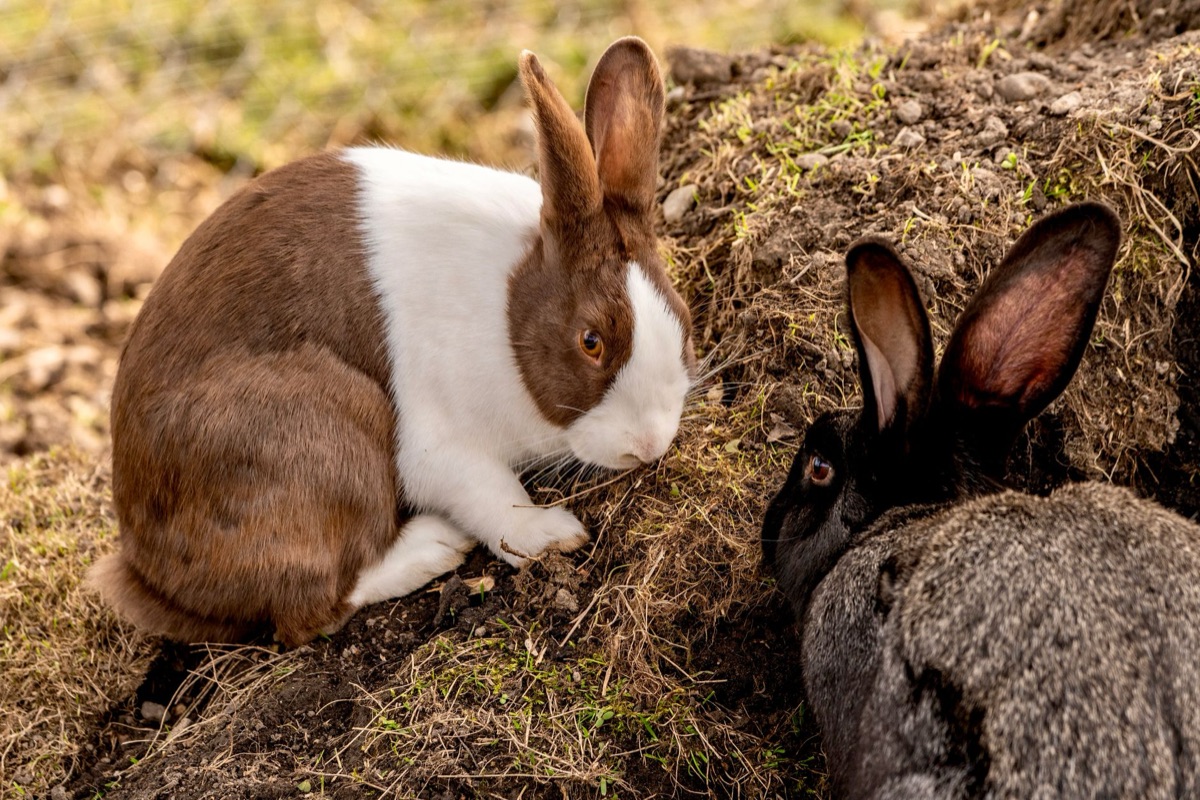
The moonlight hits the floor of the playpen as your rabbit begins to circle a specific corner, making small, repetitive noises. They are claiming this space as their own, establishing a boundary within their world.
Rabbits are highly social creatures, and their sounds play a major role in maintaining their social structure. Territoriality is a primary driver; they use vocalizations to mark territory, which is especially prevalent in multi-rabbit group settings.
In a different context, vocalization is used for nurturing. Mother rabbits may emit soft, rhythmic sounds to soothe their offspring, facilitating a bond through auditory cues.
Even in domestic settings, rabbits learn to communicate with their human caretakers. They may vocalize specifically to seek attention, request food, or ask for comfort, effectively "talking" to you to meet their social needs.
- Identify the type of sound being made.
- Check the distance between rabbits, typically 5~20 cm for grooming.
- Record the frequency of sounds over a 10-minute interval.
- Adjust the environment if stress sounds occur more than 2 times per day.
Comparison of Rabbit Vocalizations
| Sound | Primary Meaning | Typical Context | Urgency Level |
|---|---|---|---|
| Tooth Purr | Contentment | Relaxing, being petted | Low (Positive) |
| Grunt | Discomfort/Stress | Handling, new settings | Moderate (Observe) |
| Hiss | Fear/Aggression | Defense, perceived threat | Moderate (Give space) |
| High-pitched Squeak | Intense Pain/Fear | Injury, extreme stress | High (Seek Vet) |
| Whimper | Discomfort/Pain | Illness, injury | High (Seek Vet) |
Low-frequency grunts are common 80% of the time during rest. High-frequency screams are rare, occurring less than 1% of the time.
Soft purrs typically last 5~10 seconds per instance. Thumps are sudden, lasting roughly 0.5 seconds.
Social clicks occur in bursts of 3~6 sounds. Grunts are often heard 10~15 times during a meal.
Squeaks are usually under 1 second in duration. Most communicative sounds are heard within a 3-foot radius.





Comments 0